

Play For All Ages
Keith Stuart, journalist, author and life-long gamer, on why adults should play more video games.

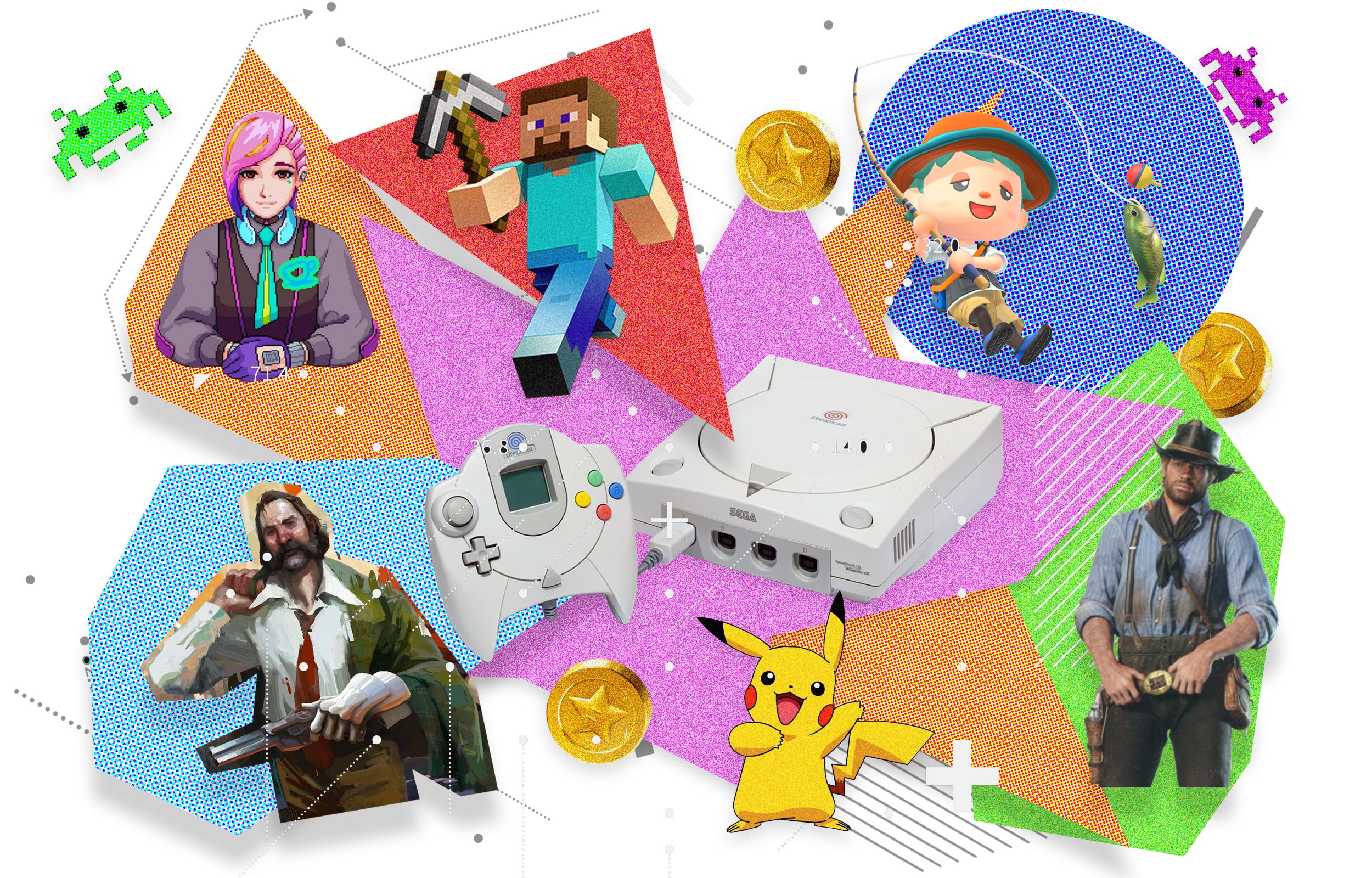
Years ago, when I was editing a magazine dedicated to the old Sega Dreamcast video game console, an unusual letter arrived at the office. At the time, the late 1990s, most of our correspondence came from men in their teens and twenties, asking about the latest game releases or looking for tips and cheats. But this letter was from an 80-year-old woman – she wanted to tell us that since her husband had died she’d become a keen fan of role-playing fantasy adventure games. Bored of spending days passively watching television, she’d bought a console and now loved immersing herself in digital worlds. They made her feel less alone, less hopeless – she was an active and powerful participant in these fantastical stories. I think she wrote to us because clearly nobody else around her understood what she was doing. But we certainly did, and we passed the letter around the office until it became something of a talisman for us. Now that I’m in my 50s I often think of that letter, especially when I find myself wondering whether I should still be spending whole weekends playing Elden Ring or Call of Duty. What that letter tells me is that, yes, I should.
The fact that I even feel compelled to ask myself that question a quarter of the way through the 21st century is an odd thing. We never worry that we’re too old to watch films, listen to music, or visit the theatre or art galleries; it is not considered bizarrely immature to play chess or cards into old age. Why video games? Partly, I suppose it’s because games are a still relatively young medium. The first commercial video game console was the Magnavox Odyssey, released in the US in 1972. That’s slightly more than 50 years ago. In comparison, films have been with us since the late 19th century, novels as we understand them today emerged in the 17th century, and precursors of chess were played in 7th-century India and possibly Ancient Egypt. Video games are still in their infancy.
We also think of computer games as being inherently childish; the most famous titles – Space Invaders, Pac-Man, Call of Duty, Super Mario – have simple stories and focus on cartoonish adventure and violence. Also, because they have become such a vital element of childhood and young adulthood (according to a 2024 survey by Children’s Commissioner for England, 89% of 3−18-year-olds play video games), they have become the subject of fear and suspicion. Moral panics over screen violence and addiction have haunted the industry for years.
But as someone who has grown up playing, making and writing about games, I see them in a very different light. And considering that they are now played by an estimated 3.2 billion people worldwide (Academy of Animated Art, 2024), I’m not alone. I believe that games have a fundamental role to play in culture, society and everyday life – even when we slide inexorably out of our twenties. And here’s why.
Just like novels, just like films, modern video games have interesting things to tell us about the world and our lives; and what’s more, they give us agency within the themes and narratives they explore. In the 2016 game Firewatch, for example, lead character Henry is forced to put his wife into care when she succumbs to early onset dementia, and seeking to escape the pain he takes a summer job as a fire-lookout in the Wyoming forests. Here he forms a friendship with his supervisor Delilah, to whom he only speaks via walkie talkie. Throughout the game, which takes the form of a murder mystery, it is up to the player to navigate this burgeoning relationship, which becomes flirtatious despite the fact that Henry is still married. It’s a heart-breaking exploration of love and grief, rendered more poignant by the player’s direct involvement: you decide just how the relationship pans out and where the characters are at the end. Elsewhere, the 2014 game The Vanishing of Ethan Carter is a study of generational trauma masquerading as a haunted house story; Disco Elysium is an existential detective drama inspired by Émile Zola and the TV series The Wire; Spiritfarer is a meditation on death and caring for those who are getting close to it. These are not pointless shooting games; they mean something.
At the same time games provide relaxing spaces and experiences, in which narrative gives way to seemingly mundane pleasures. There have always been non-violent games – from puzzlers such as Tetris to life simulations like The Sims. But the early 2020s saw the arrival of a fresh concept – ‘wholesome games’ – which entirely eschew formal concepts such as conflict, challenge and winning in favour of, well, vibes. In the beautiful game Kind Words, you write encouraging letters to other anonymous players from around the world, trading stickers and listening to the chilled soundtrack; in Coffee Talk, you’re a barista making drinks and chatting to your customers about their lives and relationships; in Unpacking, you move into a sequence of new homes and choose where to place your belongings. These activities sound like things we could and should be doing in real life, but in an increasingly stressful and abstracted society, where people live in rented homes and struggle to afford socialising in bars and restaurants, these games provide moments of soothing and contemplation.
The global spread of Covid in late 2019 was a key driver of the wholesome games phenomenon. At just the time when people found themselves stuck at home alone, Nintendo launched the Nintendo Switch title Animal Crossing: New Horizons, a game with no peril, no win-state, no overriding objectives; instead, you live on a sunny island inhabited by various anthropomorphic animals. There, you build and customise a house, complete little tasks, go fishing, explore – but crucially, you can also invite other players to your island for tea parties. Within a month of its release on 20 March 2020, it sold 5 million digital copies, setting a new sales record. It went on to sell almost 50 million. When the Guardian later ran an article on the game’s huge therapeutic value during lockdown, one player said, “I’ve never identified as a gamer and it’s the first game since being a pre-teen that I’ve bought and played. I could see the sense of community it was offering my friends when we couldn’t do things in real life. We had date nights on there, star-gazing, visiting friends and taking photos with people I was very far removed from in reality.”

Which brings us to another facet of the medium. Despite the hoary old stereotype of the lonely and isolated gamer, modern video games are inherently social. They are no longer things we just play, they are places we go. Look at the biggest games of the moment – Minecraft, Fortnite, Grand Theft Auto Online, World of Warcraft – these are all multi-player online venues. Players plug in, switch on and hang out. They make friends in these worlds and they meet up regularly; 1.17 billion people now regularly play online. In Minecraft, you can build a castle with pals; in Fortnite’s Festival mode, you can form a band and play along to hit songs, like a virtual karaoke session. This isn’t just teenagers: in the 2000s there was a group of Hollywood directors and producers who met online to play the sci-fi shooting game Halo together while discussing new deals and projects. During lockdown, I was told about the creative directors at a major book publisher who carried out their weekly virtual meetings inside the Western adventure game Red Dead Redemption Online. Dressed as cowboys, they rode the prairies of the south-western states discussing manuscripts and author contracts. I like to think that was much more creatively energising than sitting on a Zoom call, idly messing about with camera filters.
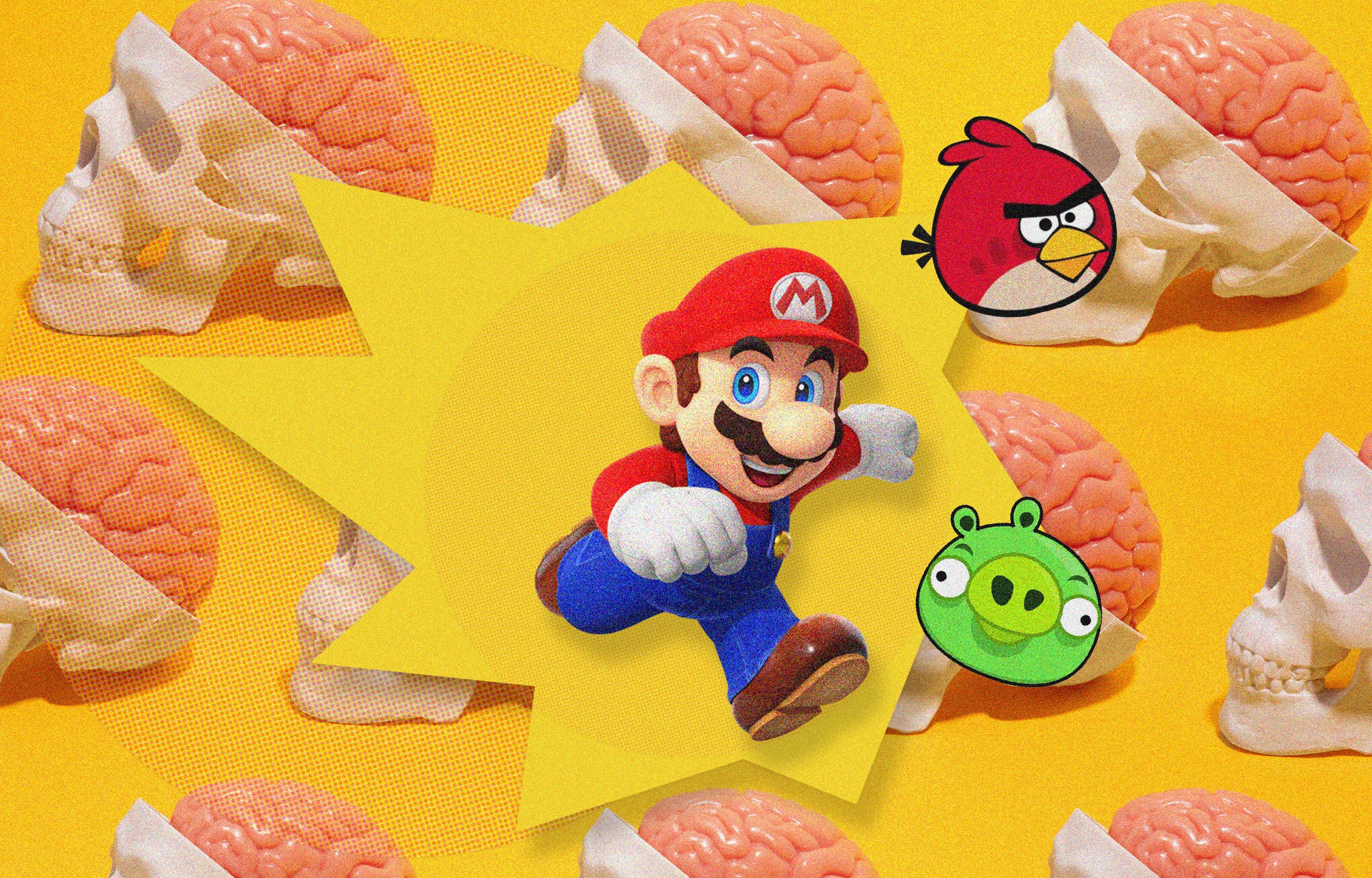
I could of course also highlight the physical benefits of video games: how they improve coordination, spatial awareness, logical thinking and decision-making. Furthermore, there has been a wealth of research suggesting that video games can play a role in slowing down cognitive decline in older people. In one of many similar studies, America’s National Institute on Aging found in 2020 that two weeks of playing Angry Birds or Super Mario resulted in improved recognition memory in participants aged between 60 and 80. But to me, these are at best supplementary benefits; I don’t think anyone should come to video games with healthcare or physical betterment as their primary aim.
Ultimately, I think adults should play video games because they’re fun, they’re interesting and they provide unique possibilities. You can play with your kids, and watch as they learn how puzzles and physics systems work. When they’re older, you can play Fortnite with them while you’re away on business. You can play with your friends – get them round and try the chaotic restaurant game Overcooked or the quiz game You Don’t Know Jack. You can play truck, train and farm simulators to experience careers you never pursued. For all the lingering moral and social stigma around games, I think it’s better to play Pocket Card Jockey, Sneaky Sasquatch or Monument Valley during your daily commute rather than endlessly doom scrolling social media.
When we received that letter from the 80-year-old woman, at the time we just thought it was cute and a little validating. But now, as I get older, I understand that what we also felt was relief – playing and loving video games didn’t have to be something we would have to give up when we grew up. We could keep playing. That means much more to me now that I’m 50 and have two grown children of my own. I’ll still lose whole days – weeks sometimes − to a new game… but even that sentence contains a subtle judgement. Did I lose that time? Was it wasted? And if so, how different would it have been if I had played chess or rummy? If I’d have binge watched a Netflix serial instead?
There are moments of video games that I have remembered for years: zombie dogs smashing through the windows in Resident Evil; reaching the summit of the mountain in Journey; finding a Pikachu in our garden while playing Pokemon Go with my young sons. Video games are great at moments; and as participants rather than observers, we are bound into the memories they create. We can experience game worlds as tourists, investigating fantastical cities and cultures, or we can role-play as assassins or tea shop owners, steering the narrative flow. Video games provide seamless, myriad routes to play, and play is a fundamental skill. We all must find ways to keep practising.
🎮
Hmm, the was a surprise read. I have rarely played video games apart from scrabble - and have snubbed my nose at everyone playing candy crush, angry birds etc. I am looking at it differently now - will dip my toe in more games.